
Employee Net Promoter Score (eNPS). It’s a prevalent metric on all employee satisfaction surveys these days. But what if the number is leading us astray?
eNPS Origins
In 2003 Frederick F. Reichheld proposed a system of understanding the customer happiness with a business, by asking the question: “How likely is it that you would recommend [company X] to a friend or colleague?” with a scoring between 1 (not likely) and 10 (highly likely).
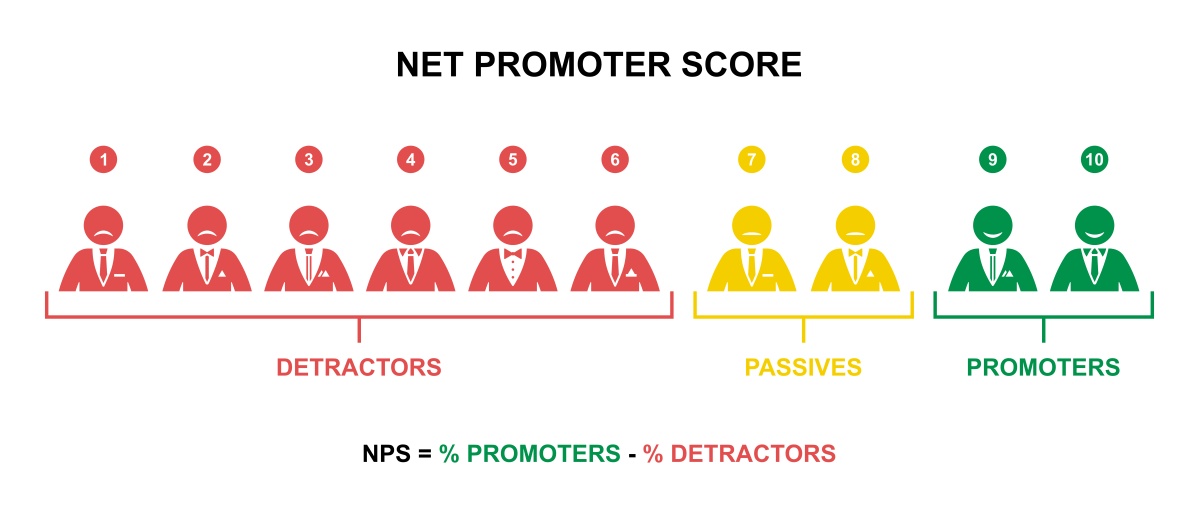
NPS is calculated by subtracting the percentage of detractors (those scoring 1-6) from the percentage of promoters (respondents scoring 9-10). If the number is positive, your public image is generally positive. If it’s below zero, it’s more negative.
Employee NPS (eNPS) is an extension of this system, used as part of company satisfaction surveys to gauge overall satisfaction with the employer. The reasoning is: Employees that are likely to recommend the company are happy employees, and those who would not, are unhappy.
Thus, eNPS boils employee sentiment down to a single number, that Senior Management can use to gauge overall satisfaction levels (often broken down by department).
Why Do We Love eNPS So Much?
For me, there’s a few reasons that it’s become so prevalent:
- It’s simple: We can look at a simple number to determine overall satisfaction without trawling through screeds of data.
- It makes it easy to view change over time.
- It’s an “Industry Standard” metric, making it easier to compare ourselves to our competitors.
The Big Problem with eNPS
eNPS tells a narrow story (poorly in my view), and is often misinterpreted as saying more than it actually does.
One Story, Poorly Told
NPS is designed to tell you one simple thing: Overall, do you have more people praising your company to the world, or more people complaining about it? It’s a measure of your public perception.
This is a powerful metric when you are providing a service or selling a product. A more positive public image means more sales.
In the context of an employee satisfaction survey though, that’s not the story we are looking to gain insight into. We’re looking to find out who is happy working for us, and where we have problems within the organisation. That’s not the same thing as who is talking peoples ear off at parties about us.
In short: we’re conflating two separate questions. Recommendation is not the same thing as satisfaction. Not when it comes to who is employing you.
Many employees would recommend their employer to a friend in need of a job. But that doesn’t preclude them being unhappy (or having issues that need to be addressed). Likewise, some employees are unlikely to ever recommend their employer, no matter how happy they are with the company.
It Ignores the “Passives”
By design, NPS ignores anyone who scores a 7 or 8. In a world where you are concerned about public image from customers, this makes sense. People are more likely to shout about your company if they are exceptionally pleased, or exceptionally unhappy. People who score a 7 or an 8 are generally happy with the product, but less likely to be making any noise about it online.
But when it comes to employee satisfaction, 7s and 8s are important scores. In many ways, I believe these scores are the most important scores in the whole question. These employees are generally happy with their employer, but may have some simple issues, that would provide a significant impact to overall satisfaction when solved.
Additionally, ignoring these scores is going to skew your results (most likely towards the negative range).
The Competition Doesn’t Matter
I mentioned before that eNPS being an industry standard question, means we can compare ourselves to our competitors. But the issue here for me is that it doesn’t matter what the other companies are scoring compared to us.
Potential employees are unlikely to be looking at your eNPS metric (if you even publish it). Instead, they’re weighing your offer of employment against several factors (Salary, Benefits, Tech Stack, etc). Any one of those factors could be enough to put you out of the running.
When it comes to current employees, they’re also not jumping ship because the other company scored a higher eNPS. If they’re looking to move, it’s because they have issues with our company, or the other company has a much more attractive package for their circumstances.
When it comes to employee satisfaction, comparing ourselves to competitors could make us rest on our laurels. “We’re better than Contoso, so we don’t need to work as hard to keep our employees”.
The fact is, we shouldn’t be comparing ourselves to other companies. We should be comparing ourselves to our past selves. How do we make ourselves a better employer than we were last year? It’s this focus that will ultimately make us an attractive employer, that inspires loyalty and attracts the top talent.
How Should We Measure Employee Satisfaction?
Well, there’s two possible aspects to that: Fix the issue; or ignore the question.
Fix the Issue
If we still want to have a single metric, we should change a few things:
- Change the wording of the question: Ask the question we’re really interested in, rather than beating about the bush. E.g. “Overall, how satisfied are you with [company] as an employer?”
- Scrutinise the entire range of answers: Knowing how many people gave what score is illuminating. But crucially, don’t ignore any particular subsection of the scores
- Score based on overall percentage: If you still need to boil it down to a single numeric score, pick a “generally satisfied” cut-off (I’d suggest 7+ here). Then calculate the percentage of respondents who are at or above that cut-off.
Ignore the Question
This is, personally, my preferred approach, and one I generally take when reviewing satisfaction survey results. Whilst I do look at the results from eNPS, I’m more interested in the breakdown of scores than the overall calculation.
However, I’m much more interested in all the other questions we ask.
When we do satisfaction surveys, the eNPS question is only one of many. The survey usually has lots of questions around the employee’s sentiment around the management, leadership, work, expectations, etc. These questions are (in my opinion) much more interesting and valuable.
You almost certainly also have free-text comments boxes you can scrutinise for patterns of complaints. These fields provide incredibly valuable insights. Employees who are invested (and feel safe) enough to fill the free-text fields out will provide a wealth of intelligence on areas where you could look at improving matters to increase satisfaction.
It is very rare to have a department that is perfectly happy and have no areas for improvement. Regardless of the eNPS score, every department leadership should be trawling their results on each of these questions for insights in how to improve their area.
Finally, don’t wait until a once-a-year satisfaction survey. All your managers should be having regular 1:1s with their reports. Higher-level managers will ideally be regularly arranging skip-level 1:1s with their indirect reports. These should be safe spaces where your employees feel able to raise concerns and issues. Use those to gauge satisfaction and spot issues early. Encourage your managers to bubble potential concerns up from these meetings for greater visibility.
Summary
In my view, extending NPS as a metric for employee satisfaction is flawed. It conflates two separate questions, and assumes that because the metric is transferable for customers, it must be so for employees. This is not the case. Employee satisfaction is multi-faceted, and we are better served when we bear that in mind.
So please, next time you’re looking over your departments satisfaction survey results, look beyond the eNPS score, and see the real story of your teams satisfaction.
What are your thoughts around eNPS? Do you have a different viewpoint I have not considered? Do you favour a different method of gauging satisfaction?
 Kept in Tech